
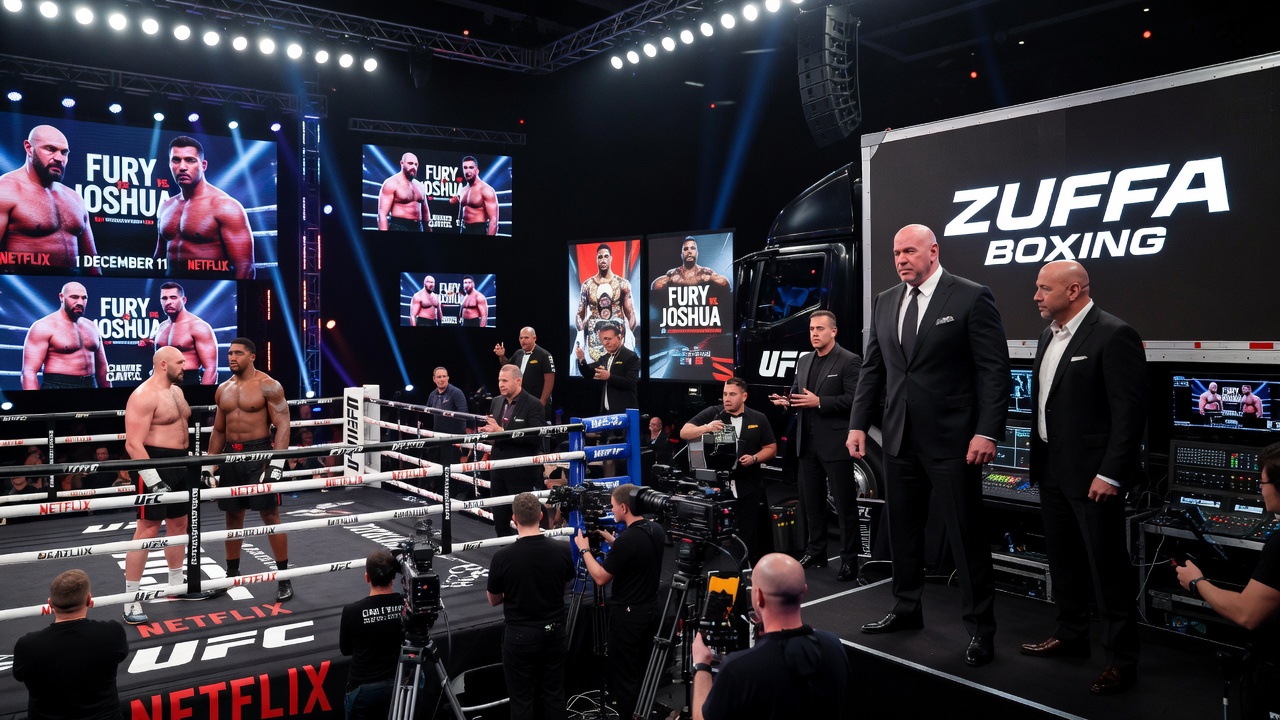
A public spat over credit for one of boxing's biggest paydays has exposed how tangled the business of staging a modern megafight has become. Dana White, UFC's chief executive, confirmed this week that his organization will produce the Tyson Fury vs. Anthony Joshua broadcast even as promoter Eddie Hearn insists White's involvement has collapsed. The disagreement, playing out in dueling press statements rather than a courtroom, reveals how much production, streaming rights, and promotional branding have become separate and contested layers of a single event.
Who actually runs a fight night
Professional boxing has traditionally split responsibilities among promoters, broadcasters, and venue operators, each with their own financial stake. Hearn and Frank Warren remain the promoters of record for Joshua and Fury respectively, meaning they handle fighter contracts, purses, and local licensing. White's role, by his own account, sits elsewhere: his team, operating under the Zuffa Boxing banner alongside executive Nick Khan, is producing the broadcast itself for Netflix. Production control matters commercially because it shapes how the event is packaged, branded, and ultimately valued by the streaming platform footing the bill.
This distinction explains why both men can claim to be right. Hearn frames "involvement" as promotional authorship - his name on the poster, his negotiations with fighters. White frames it as operational control over what viewers actually see on Dec. 11 from Cardiff. Neither definition is dishonest; they're simply describing different jobs within the same event.
Why the public disagreement matters commercially
Public disputes between executives rarely stay private in combat sports, where personal brand and perceived leverage affect future deal-making. Hearn's claim of a "PR disaster" for White's camp is itself a negotiating tactic, signaling to fighters, broadcasters, and sponsors that Hearn's promotional outfit retains primary standing. White's blunt rebuttal - insisting UFC's production credit is not in dispute - protects his own commercial relationship with Netflix, a platform increasingly central to how combat sports reach global audiences.
For Netflix, the arrangement reflects a broader pattern among streaming services entering live sports: they often rely on experienced production partners rather than building broadcast infrastructure from scratch. UFC's production arm brings pay-per-view-era expertise that traditional boxing promotions, built around television deals rather than direct-to-consumer streaming, may not replicate as efficiently.
What this means for fans and bettors
For audiences, the production and promotional disputes have limited direct consequence beyond scheduling certainty and broadcast quality. But the episode is a reminder that major sporting events are assembled from multiple contractual layers, and that promotional noise ahead of a fight - claims, counterclaims, and declared "wins" in the press - is itself part of how interest and anticipation are manufactured. Anyone following the buildup, including those engaging with betting markets tied to the fight, should treat promotional statements from either camp as commercial positioning rather than confirmed fact about how the event will unfold. Odds and market interest can shift based on perceived chaos or confidence in an event's organization, which is one more reason consumers should rely on verified fight details rather than sparring quotes when making decisions.