
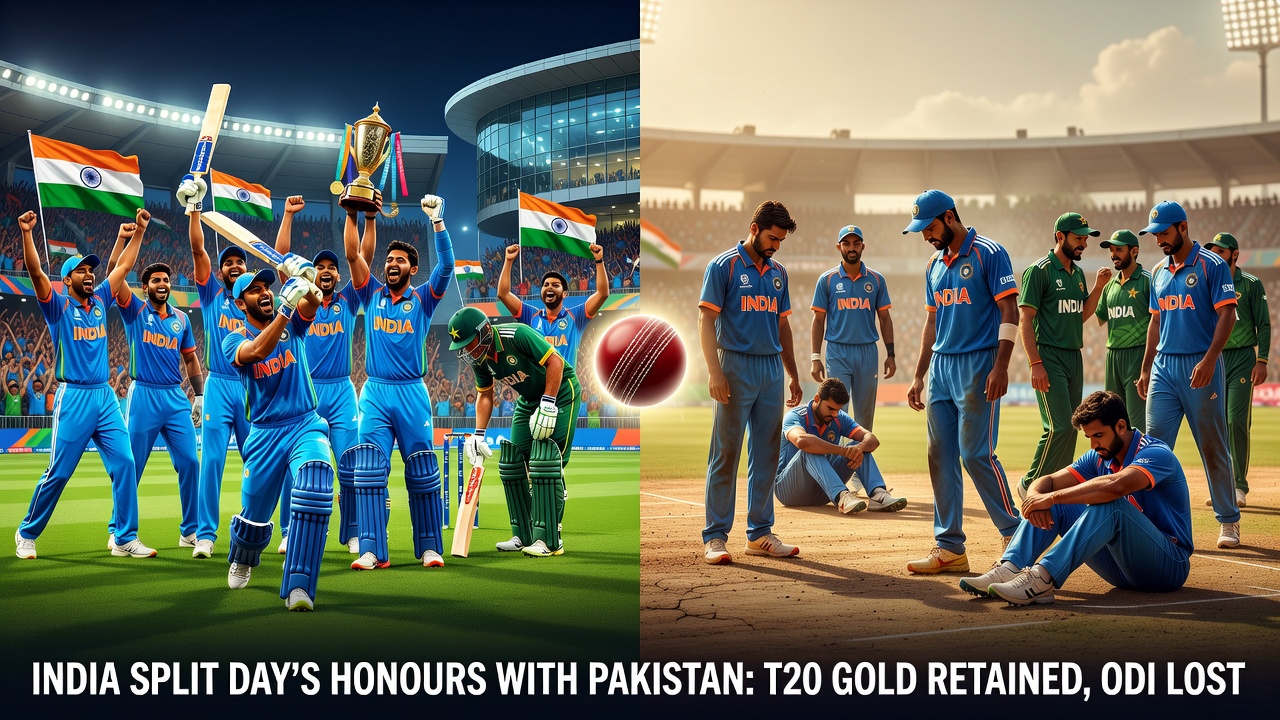
India's cricketers delivered contrasting results on the same day, underlining both the depth of the country's playing resources and the unpredictability that keeps the sport commercially compelling. In Japan, India retained their Asian Games T20 gold medal with a 19-run win over Pakistan. Hours later in New Chandigarh, their one-day side let slip a 3-0 series sweep as West Indies captain Shai Hope struck an unbeaten 162 to chase down 352, a record total successfully pursued against India.
A Lopsided Rivalry Continues
India's 211-6 against Pakistan, built on Abhishek Sharma's rapid 61 and Tilak Varma's unbeaten 51, proved too much despite a defiant 96 from Hasan Nawaz. The result extended India's dominance in the fixture to seven straight T20 wins and 14 from 18 meetings overall. That kind of lopsided head-to-head record matters beyond the scoreboard: it shapes how broadcasters price rights, how bookmakers set markets, and how advertisers calculate the value of India-Pakistan fixtures, which remain among the most watched in global cricket regardless of how predictable the outcome has become.
West Indies Deny A Clean Sweep
The one-day contest told a different story. India posted 351-7, with KL Rahul unbeaten on 129 and Rohit Sharma contributing 92, after early wickets from Jayden Seales removed Shubman Gill and Virat Kohli in successive deliveries. West Indies, needing a record chase to stay competitive in the series, got there through Hope's 143-ball innings of 17 fours and three sixes, supported by stands with Amir Jangoo, Keemo Paul and Gudakesh Motie. A contentious review decision against Sherfane Rutherford, upheld despite his protests over the Snicko reading, added a layer of controversy that will likely feature in post-match discussion around the accuracy of technology used to adjudicate marginal calls.
Why High-Scoring Chases Matter To The Betting Market
Results like this carry weight for anyone following cricket through a betting lens. A target of 352 being chased down with balls to spare resets perceptions of what is defensible in white-ball cricket, and sportsbooks adjust in-play pricing models accordingly. Big, record-breaking chases also tend to draw spikes in betting turnover, since live markets react quickly to shifting momentum. That volatility is precisely why regulated operators are expected to apply consistent responsible-gambling safeguards during high-profile series - deposit limits, self-exclusion tools and clear display of odds remain standard expectations regardless of how dramatic a match becomes. No betting product can offset the fundamental uncertainty that made Hope's innings remarkable in the first place; unpredictability is the feature that sustains interest, not a flaw operators or bettors can engineer around.
What Comes Next
Attention now shifts to a five-match T20 series between the two sides starting in Lucknow, with several Asian Games gold medallists, including Abhishek Sharma, Tilak Varma and 15-year-old Vaibhav Sooryavanshi, returning to the squad. Cricket's continued presence at the Asian Games, confirmed again for Qatar in 2030, reflects its growing role in multi-sport events and the broader commercial ecosystem around the game, from broadcast deals to sponsorship and betting markets tied to major tournaments.