
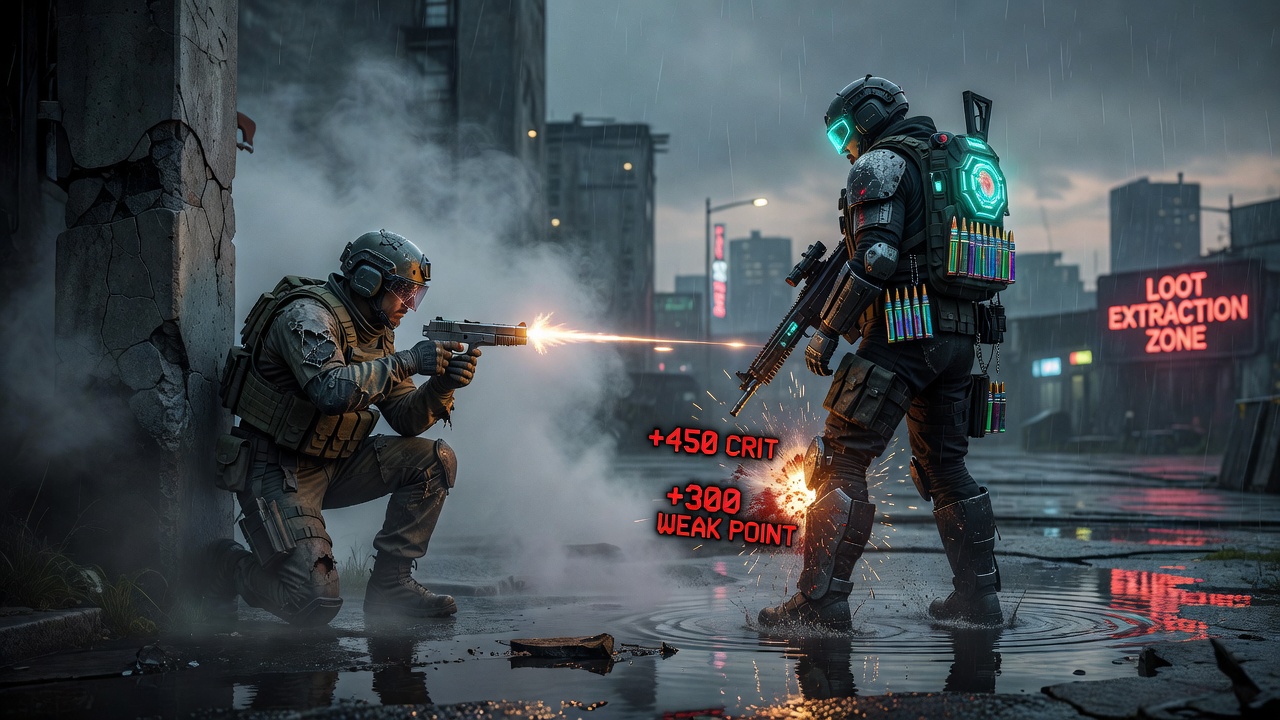
A player strategy circulating in a looter-shooter community has exposed something developers rarely want spotlighted: when in-game economies reward predatory behavior more than skill, players will follow the incentive, not the intended experience. The tactic is simple - buy hollow-point ammunition, pair it with a starter weapon available at no cost, then stalk well-equipped opponents and target their legs before they can react. It works because the math behind it works, not because of any technical exploit.
Why a Cheap Loadout Outperforms Expensive Gear
Hollow-point rounds are typically modeled in these games to deal disproportionate damage, often multiplied far beyond standard ammunition once a multiplier like the reported x100 value is applied. Combined with a free weapon, the build removes the usual trade-off between cost and power. A player ordinarily invests resources to get stronger; here, the investment goes entirely into the ammunition, while the delivery mechanism is free. That asymmetry is the root of the dynamic described - low financial risk, high lethality, against targets who carry everything to lose.
The Behavioral Shift: Patience as a Weapon
What makes this approach notable is not the gear itself but the playstyle it forces. Camping, tracking, and leg-targeting are not accidental choices; they are the logical response to a system where one well-placed hit ends an encounter instantly. Players describe needing to be "sneaky and aware," which signals a shift from reflex-driven combat toward predatory patience. This is a recognizable pattern in extraction-style and loot-driven games: when the penalty for death is severe and the reward for a kill is large, cautious ambush tactics tend to replace open engagement, regardless of what the designers intended the pace of combat to feel like.
Why This Matters Beyond One Game
The tension the player describes - enjoying the challenge while disliking the resulting atmosphere - is a familiar signal in live-service game economies. Loot systems, ammunition tiers, and damage multipliers are balancing levers, and small miscalibrations ripple outward into social behavior within the game. The same principle applies in regulated gambling products, where payout structures and bonus mechanics shape user behavior far beyond their intended purpose. A damage multiplier that is "too generous" is the gaming equivalent of a betting feature that is too easy to exploit: both quietly redirect player behavior away from the designed experience and toward whatever the numbers actually reward.
What Players and Developers Should Take From It
- Resource-to-power ratios need regular review, since a single underpriced item can restructure how an entire community plays.
- Player-reported dynamics like this are often the clearest early signal of an economy imbalance, arriving well before formal data analysis would catch it.
- A playstyle that feels "unpleasant but effective" usually indicates a mechanical imbalance rather than a flaw in player creativity.
None of this requires outrage. It requires attention. Economies, whether in a shooter or a wagering product, behave exactly as their incentives dictate - and players will always find the most efficient path through them, for better or worse.