
Labour has retained Holborn and St Pancras at a by-election triggered by Sir Keir Starmer's departure from the Commons, with council leader Sagal Abdi-Wali elected as the seat's new MP. Green Party leader Zack Polanski, who finished second with a substantially increased vote share, has told Sky News he has no intention of stepping down despite falling short in his first attempt to enter Parliament.
A strong second place, not a breakthrough
Polanski took 32.81% of the vote, a rise of more than 22 points on the Green performance at the last general election in this constituency. That is a significant swing by any measure, and it underlines the extent to which the Greens have positioned themselves as a left-of-Labour alternative in dense urban seats. But a strong second is still a defeat, and the question facing Polanski now is whether a single by-election surge translates into sustained electoral pressure on Labour, or whether it remains a protest-vote phenomenon confined to unusual contests with low turnout and high media attention.
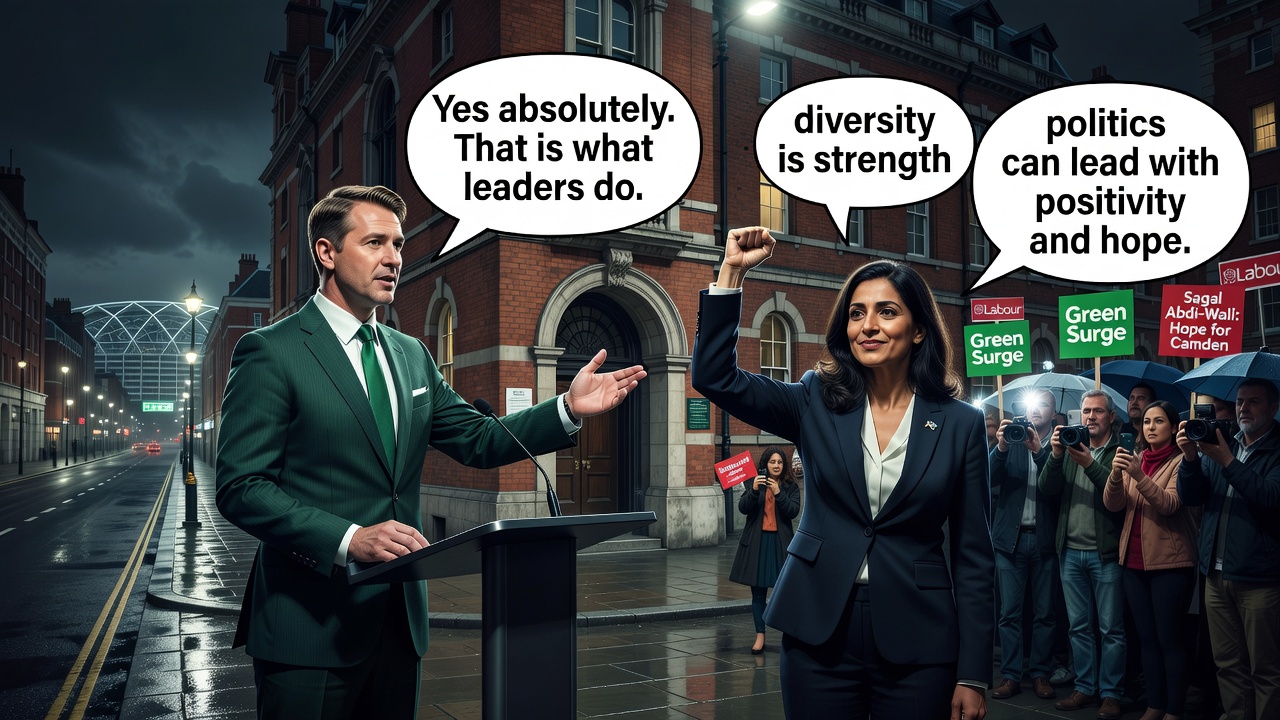
Speaking after the result, Polanski rejected any suggestion that contesting the seat had been a misjudgement. He argued the campaign gave the party a platform to talk about rent controls, the climate crisis and the nationalisation of Thames Water, and said he had no regrets about standing. Asked directly whether he would remain leader, his answer was unambiguous: "Yes absolutely. That is what leaders do."
Who replaces Starmer in Holborn and St Pancras
Abdi-Wali, leader of Camden Council and the borough's first black female leader, won with 45.17% of the vote, down nearly four points on Labour's previous result. Born in Somalia, she arrived in the UK as a child refugee during the country's civil war and went on to lead Camden's housing team before entering frontline local politics. In her victory speech she framed the result as a rejection of division, telling supporters that "diversity is strength" and that the campaign had shown politics "can lead with positivity and hope" rather than fear.
That framing was a direct response to comments made during the campaign by Reform UK's Zia Yusuf, who questioned Abdi-Wali's candidacy by referencing her birthplace. The remarks were widely condemned, including by cabinet minister Jonathan Reynolds, and became a notable undercurrent of the contest. Abdi-Wali said the rhetoric left her "sad" rather than angry, but added she was conscious of how such language affects young people considering a future in public life.
Policy battlegrounds: housing, water and the Gaza motion
Beyond the personalities, the by-election exposed the issues likely to dominate debate in the seat and beyond. Abdi-Wali named homelessness and the housing crisis as her immediate priorities, alongside a call to bring Thames Water into public ownership amid long-running complaints about service quality and infrastructure failures. Polanski made similar arguments central to his own campaign, suggesting a degree of policy overlap between Labour's left flank and the Greens that will shape how both parties compete for the same voters in future contests.
Polanski also used his post-result remarks to address the Green Party's conference vote on a motion describing "Zionism as racism," a decision that has drawn criticism from Jewish community figures. He said the party must avoid conflating anti-Semitism with criticism of the Israeli state, arguing that Jewish safety and Palestinian rights "can have both and must have both." The comments signal that the debate inside the Greens over how the party articulates its position on the Middle East is far from settled, and will likely follow Polanski into future campaigns regardless of his electoral performance.
What the result signals
- Labour held the seat but with a reduced majority, a pattern consistent with pressure from its left in urban, younger-skewing constituencies.
- The Green surge was real but unverified as a national trend until tested in further contests outside a by-election environment.
- Reform UK's vote share dipped slightly, and the party's campaign conduct drew cross-party criticism.
- Internal party debates - over Middle East policy for the Greens, over housing and water policy for Labour - are likely to shape the next phase of competition in similar seats.