
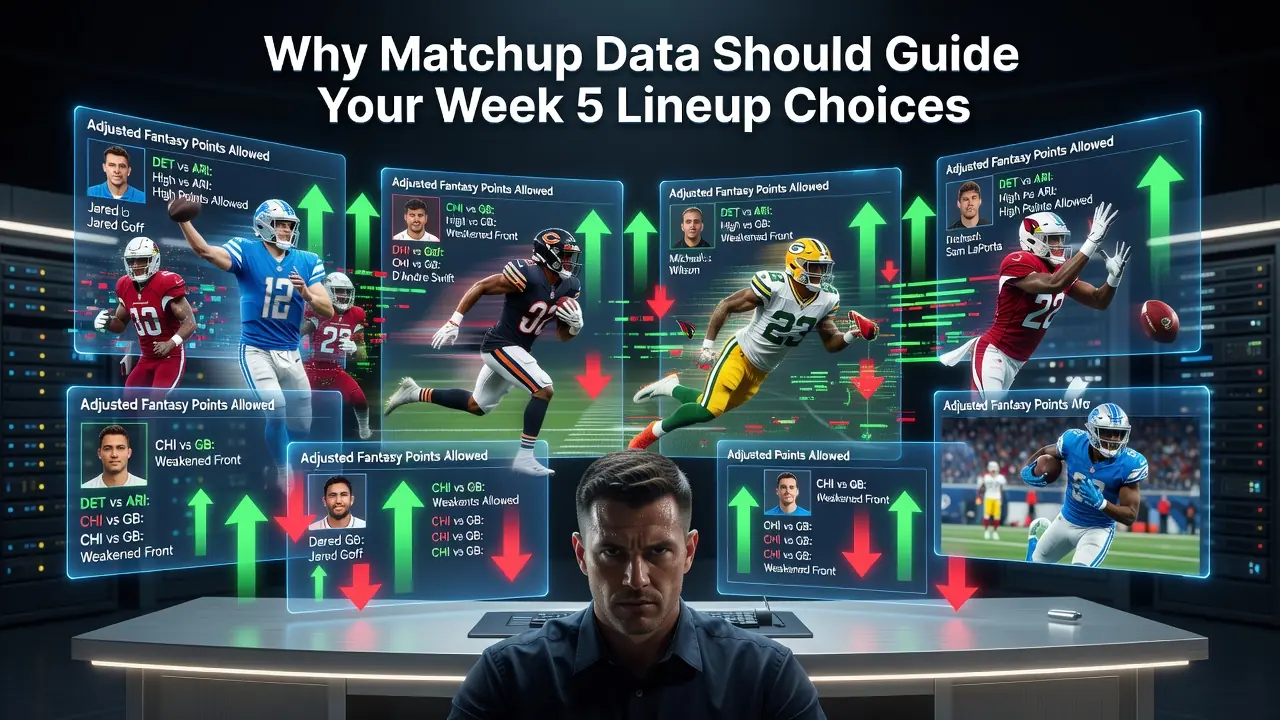
Fantasy football managers face a weekly puzzle with no perfect answer: which players to start when the talent gap between options is thin. The tiebreaker that separates informed decisions from guesswork is matchup quality - a measure of how a defense performs against a position relative to the schedule it has actually faced, not just raw season totals.
What Adjusted Fantasy Points Allowed Actually Measures
Seasonal point totals allowed by a defense can mislead. A team that has faced four high-powered offenses in a row will look worse than its true talent level suggests, while a defense that has drawn a string of backup quarterbacks might appear elite. Adjusted Fantasy Points Allowed, or Adj. FPA, corrects for this by comparing how much a defense allowed relative to each opponent's normal weekly production. A positive number signals a defense is playing below its typical standard - good news for the player facing it. A negative number means the defense has been tougher than average, regardless of who it has lined up against.
This week's data draws on the full 2026 season so far. Once five weeks are complete, the model shifts to a rolling five-week window, which keeps the rankings responsive to injuries, scheme changes, and personnel shifts rather than anchored to stale early-season numbers.
How the Numbers Translate Into Real Decisions
At quarterback, Detroit's Jared Goff draws a Cardinals secondary that has bled fantasy points to a string of passers in recent weeks, in a game with one of the highest scoring totals on the board. At running back, Chicago's D'Andre Swift benefits from a Green Bay front that has struggled against the position since losing a key linebacker to injury. Wide receiver Michael Wilson in Arizona and tight end Sam LaPorta in Detroit both profile as strong plays against defenses that have been generous at their respective positions.
The same logic flags fades. Seattle has turned into a difficult draw for opposing quarterbacks, San Francisco's run defense has limited opposing backs near the goal line, and the 49ers have been among the stingiest teams against wide receivers. These aren't guarantees of failure - they're probabilities shaped by real defensive performance.
Matchups Are a Tool, Not a Formula
None of this data should be treated as deterministic. A favorable matchup doesn't guarantee production, and an unfavorable one doesn't doom a player to a bad week - injuries, game script, weather, and simple variance all intervene. Matchup analysis works best as one input among several, alongside target share, snap counts, and a team's broader offensive trends.
The underlying discipline here mirrors what responsible bettors and analysts apply elsewhere in sports: use calibrated data to narrow uncertainty, not to manufacture false confidence. Fantasy football carries no stakes beyond bragging rights for most players, but the habit of reading matchup data critically - rather than chasing season-long totals at face value - is the same skill that separates informed decision-making from pure chance in any data-driven contest.