
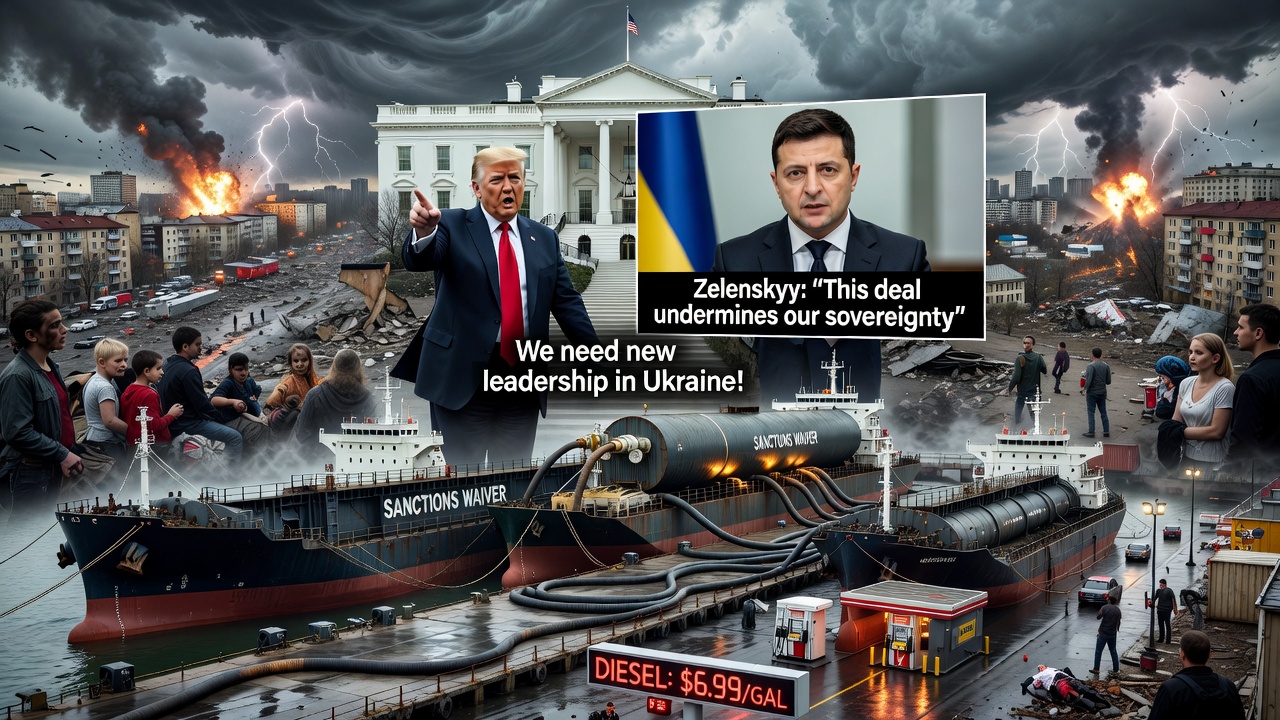
President Trump said Saturday that Ukraine needs a new president, arguing that Volodymyr Zelenskyy has failed to secure a deal to end the war with Russia despite years of opportunity. The remark, delivered to reporters as Trump departed the White House for Tennessee, came hours after Zelenskyy publicly criticized a new U.S.-brokered diesel arrangement with Moscow. The exchange exposed a widening rift between Washington and Kyiv at a moment when Russian strikes continue to kill civilians across Ukraine.
A Clash Over Strategy and Blame
Trump's comments went beyond frustration with the pace of negotiations. He blamed Ukrainian strikes on Russian oil refineries for pushing up diesel prices ahead of the U.S. midterm elections, framing Kyiv's military actions as a domestic economic liability. He also revived his claim that Russia's 2022 invasion would never have happened under his watch, calling the war a product of "incompetence" rather than a deliberate act of aggression by Moscow. Zelenskyy, he said, has overseen the loss of 30 percent of Ukrainian territory and millions of displaced or killed people - a toll Trump used to argue for new leadership rather than continued resistance.
Ukraine's government pushed back quickly. Foreign Minister Andriy Sybiga said Zelenskyy retains the backing of the Ukrainian people and that outside commentary on his leadership only underscores his legitimacy. The dispute highlights a recurring tension in the alliance: Washington's desire for a negotiated end to the war versus Kyiv's insistence that any settlement reached under pressure could reward the aggressor.
The Diesel Deal and Its Implications
The immediate trigger for Saturday's exchange was a new fuel arrangement announced by Trump on Friday. Under the deal, Russia would supply more than 300,000 tons of diesel immediately, followed by additional shipments reaching into the millions of tons over the coming months. To facilitate this, the Treasury Department issued a temporary waiver on sanctions targeting Russia's energy sector - a notable reversal just weeks after Trump signed a sweeping sanctions law meant to choke off the oil and gas revenue funding Russia's war effort.
Zelenskyy called the arrangement a gift to Moscow, warning it would be repaid "with further terror and perfidy." His argument is straightforward: easing sanctions on Russian energy exports, even temporarily, injects revenue into a war economy that has shown no sign of slowing its bombing campaigns. He pointed to Saturday's strikes on Zaporizhzhia, which killed at least 20 people including three children, as evidence that sanctions relief is read in Moscow as license to continue, not incentive to stop.
Why the Policy Reversal Matters
Sanctions policy toward Russia has functioned as one of the primary levers available to Western governments short of direct military involvement. A sudden, even temporary, suspension of restrictions on a sector as central as energy sends a signal to markets and to Moscow about the durability of U.S. commitments. For allies and for Ukraine itself, consistency in sanctions enforcement is often as important as the sanctions themselves - waivers introduced for short-term economic relief, such as lowering diesel prices domestically, can undercut the credibility of the broader sanctions architecture built over years.
The human cost continues in parallel with the diplomatic friction. Russian strikes have killed more than 60 people in Ukraine over the past four days alone, including the Zaporizhzhia bombing and a daytime missile strike on Kyiv that wounded four. Zelenskyy's framing - that "different signals are needed" - reflects a broader argument from Kyiv that economic accommodation toward Russia, absent a ceasefire, risks prolonging rather than resolving the conflict.